
You just spotted a jacket or pants online, and two sizes seem plausible: M and L. The manufacturer’s guide doesn’t really help you, because your measurements fall right between the two. This uncertainty is common, and it doesn’t get resolved by simply choosing “the next size up for safety.” Choosing between size M and L requires reasoning by type of clothing, body area, and usage.
M on top and L on the bottom: adjusting the size for each piece in your wardrobe
Many people do not wear the same size for a top and a bottom. This is normal. Human morphology is not symmetrical: a narrow bust can be accompanied by wide hips, or vice versa.
When you hesitate between M and L, the first question to ask yourself is not “what is my size?”, but “which piece am I choosing?”. Understanding the difference between size M and L starts with this distinction between the upper and lower body.
For a top (t-shirt, sweater, shirt), the bust measurement is the determining factor. This is the widest part of the bust, measured under the arms. If your bust measurement corresponds to an M in the manufacturer’s guide, take an M, even if you wear an L in pants.
For pants, the waist and hip measurements decide. And if the two do not fall in the same column of the chart, prioritize the larger measurement. Pants that are too tight at the hips will not “give” over time.
For a dress shirt, a third criterion comes into play: the neck circumference and sleeve length. These measurements do not exist on a t-shirt. Two people wearing the same M in a t-shirt may need different sizes in a shirt.
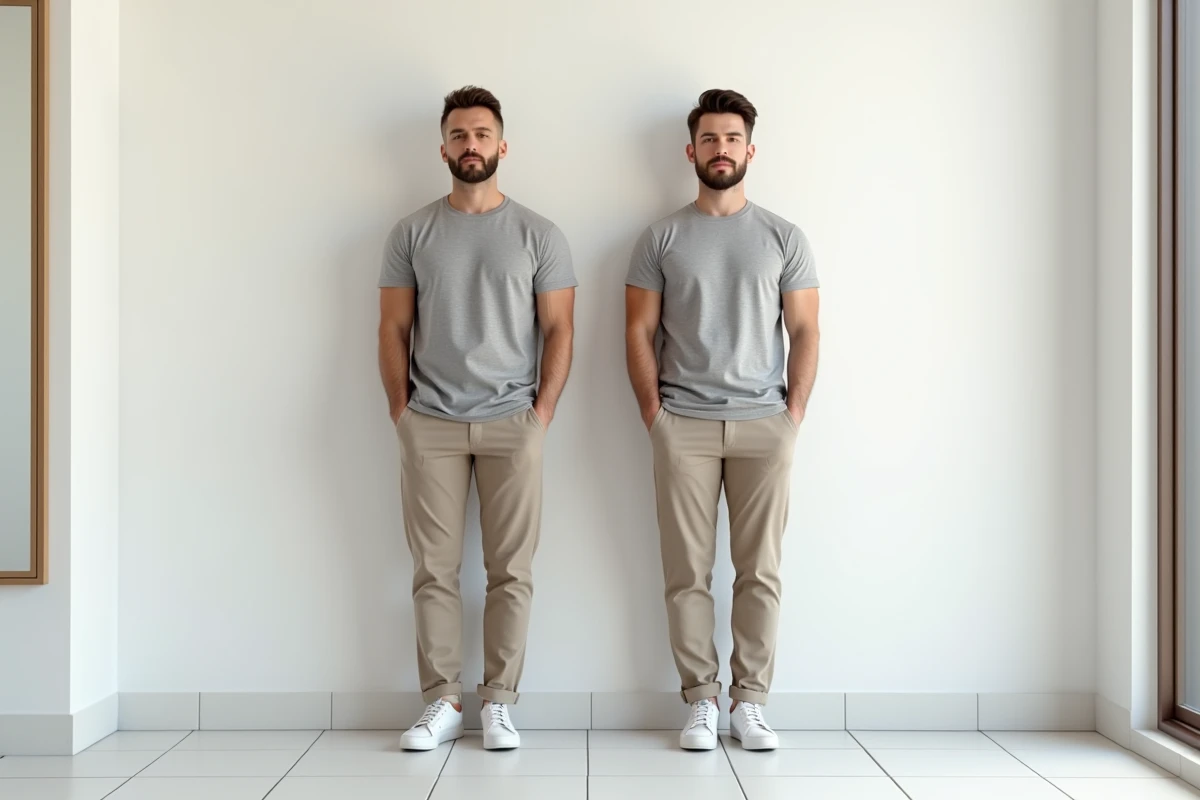
Measuring between M and L: the method that avoids mistakes
You may have noticed that a garment ordered in the morning can seem more fitted by the evening? The body changes volume throughout the day. Some guides recommend taking your measurements in the middle of the day, with your usual underwear, to get a realistic result.
Steps to follow with the measuring tape
The measuring tape should remain horizontal, flat against the skin, without tightening. If you pull it, you can easily lose one or two centimeters, which is enough to switch from one size to another.
Here are the areas to measure according to the targeted piece:
- Bust measurement: run the tape around the widest part of the bust, under the arms, keeping your arms down by your sides
- Waist measurement: measure at the most indented part of the abdomen, generally above the navel, without sucking in your stomach
- Hip measurement: place the tape around the widest part of the buttocks and hips, with feet together
- Inseam: measure from the inside of the thigh (highest point) down to the ankle, for pants
If your measurements fall between two sizes in the guide, note the difference. One centimeter above the M limit does not automatically mean you should switch to L.
Cut, material, and comfort: what sways the choice towards M or L
Raw measurements are not enough. The cut of the garment changes the size to choose, sometimes more than your own measurements.
A fitted t-shirt (slim or fitted) is tailored closer to the body. If you are between M and L, the L may feel loose at the bust. Conversely, with a straight or oversized cut, taking the M may result in a too-tight fit.
The role of material in size choice
A fabric with a bit of elastane adapts to the body and tolerates a difference of one or two centimeters. On this type of material, staying with the smaller size often works better.
A rigid fabric (thick cotton canvas, linen, raw denim) does not stretch. With a rigid material, the larger size is safer when you hesitate. The garment retains its original volume after several washes.
Additionally, there is the question of comfort based on usage. A technical garment for sports needs to be close-fitting to function well. An office garment worn for eight hours a day benefits from leaving a few centimeters of ease.
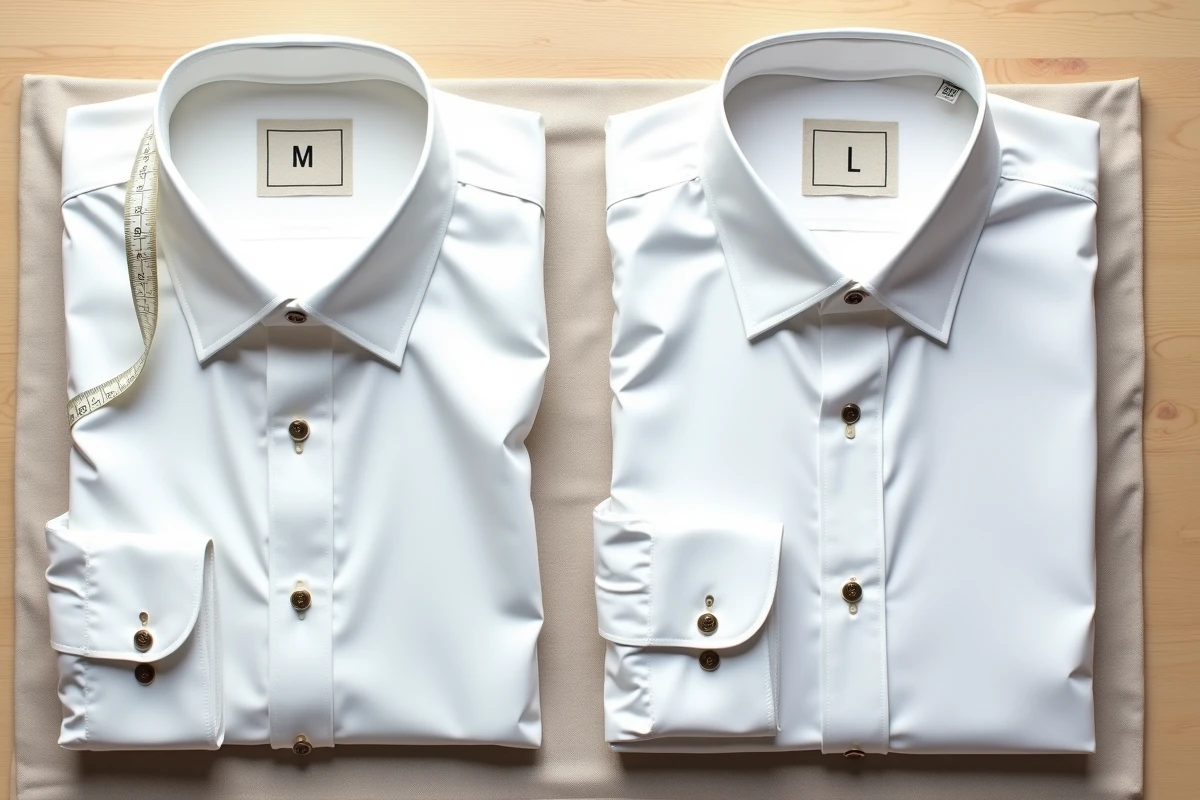
Variability between brands: why an M is not always an M
You can wear an M at one brand and an L at another without having gained a gram. There is no universal standard for sizes M and L. Each brand defines its own correspondences, sometimes influenced by the country of design.
A European brand and an American brand do not assign the same centimeters to the letter M. The differences can reach several centimeters in bust or waist measurements. This variability explains why relying solely on “I wear M” often leads to disappointments.
Adjustments that compensate for hesitation
Some garments incorporate elements that reduce the problem of choosing between two sizes:
- Removable belts or adjustable elastic on pants, common in sportswear
- Extra buttons on shirts (collar, cuffs) that allow for adjusting the fit
- Drawstrings at the waist or hem on jackets and parkas
These technical details do not replace good measurement taking, but they offer a valuable margin of maneuver when your measurements are exactly on the border.
Always take your measurements before consulting a size guide, even if you think you know your size. Your measurements change, and so do brands. A successful purchase hinges on a measuring tape and five minutes of patience, not on a letter memorized three years ago.