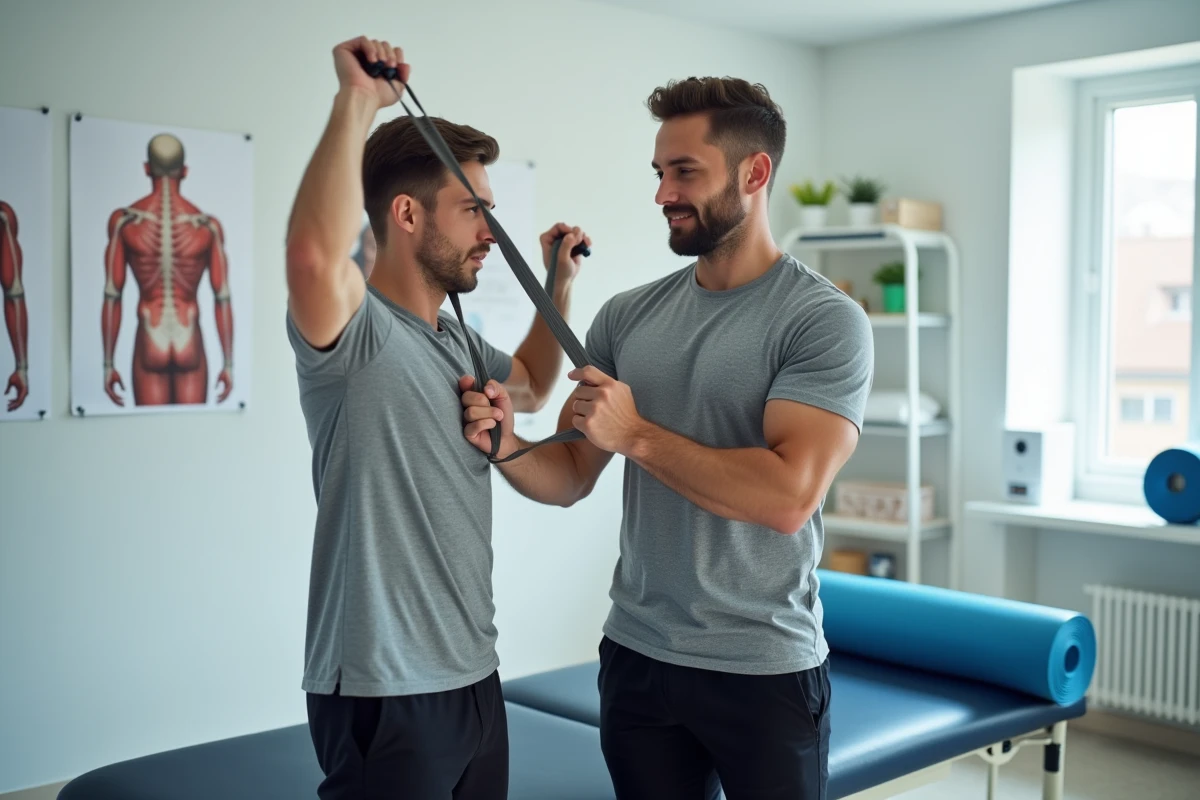
A torn supraspinatus tendon does not always manifest as sharp pain. The problem is often discovered when raising the arm to grab something high, putting on a sweater, or carrying a grocery bag. Discomfort gradually sets in, and the temptation to stop moving the shoulder worsens the situation.
Resuming movement in a controlled manner remains the best strategy to regain function, provided that a few principles clarified by modern rehabilitation are respected.
eccentric work of the supraspinatus: the underestimated pillar of recovery
Most rotator cuff rehabilitation programs suggest rotations with elastic bands and pendulum exercises. Eccentric work, which involves controlling the downward phase of a movement rather than the upward phase, is often overlooked.
In practice, you take a light dumbbell or an elastic band, raise the arm with the help of the other hand (or a partner), and then slowly lower it over four to five seconds. It is this slow downward phase that stresses the tendon without overloading it. The rule: the pain felt during the exercise should not exceed a moderate threshold, often rated around 3 on a scale of 10.
Recent summaries from physiotherapists and orthopedic surgeons confirm that programs including well-dosed eccentrics are a cornerstone of treatment for tendinopathies and partial tears of the supraspinatus. The current trend is even to introduce them earlier in the protocol than before, as soon as acute pain begins to subside.
To delve deeper into the exercises for the supraspinatus suitable for a tear, it is beneficial to understand this eccentric mechanism before embarking on any classic strengthening.

Weekly load management: the mistake everyone makes unknowingly
Physical efforts are often concentrated on one or two days (complete house cleaning on Saturday, DIY on Sunday, intensive training on Monday). For a shoulder with a torn supraspinatus tendon, this concentration of load is the primary factor for painful flare-ups and rehabilitation failure.
Spreading tasks throughout the week significantly reduces relapses. This is the principle of “load management,” borrowed from high-level sports and now applied in rotator cuff rehabilitation. We are not talking about total rest, but about planning.
What this looks like in practice
- Alternating a day of tasks that engage the shoulder (vacuuming high, organizing cupboards, carrying groceries) with a lighter day for the upper limb
- Incorporating rehabilitation exercises on “light” days rather than after a day of intensive DIY
- Monitoring repetitive movements at work (arms held above shoulder level) and breaking sessions with active breaks
Feedback on this point varies among patients and professions, but specialized physiotherapists report that this distribution logic makes a bigger difference than the choice of a “miracle” exercise.
Strengthening the rotator cuff without trapezius compensation
A common pitfall in supraspinatus rehabilitation: the upper trapezius takes over. One thinks they are working the shoulder, but it is the upper back and neck that compensate. As a result, the supraspinatus remains weak, and cervical pain adds to the initial problem.
To avoid this compensation, the scapula must be kept low and pressed down during each exercise. Two movements are well-suited for this work:
External rotation with the elbow at the body using an elastic band, keeping the elbow glued to the ribs and thinking about lowering the shoulder before pulling. You can feel the work happening at the back of the shoulder, not in the neck.
Partial lateral raise (not above shoulder level) with a very light weight, thumb turned upward. This position reduces the risk of impingement under the acromion and promotes activation of the supraspinatus over the trapezius.
Movements to avoid with a torn supraspinatus tendon
Not all shoulder exercises are equal when you have a tear. Some movements exacerbate the conflict between the tendon and the bony arch above, which maintains inflammation and can widen the lesion.
- Lateral raise above shoulder level: the supraspinatus tendon rubs directly against the acromion in this area, causing irritation and pain
- Military press or overhead press: the load combined with maximum amplitude above the head puts excessive compression on the tendon
- Pulling movements behind the neck (high pulley, guided bar): they force the shoulder into external rotation and retraction under load, a particularly aggressive position for a weakened cuff
- Consistently sleeping on the side of the affected shoulder: this is not an exercise, but this nighttime gesture compresses the tendon for hours and sabotages daytime rehabilitation work
The reflex to maintain: any movement that triggers sharp pain during or after execution must be removed from the program. Pain is not a signal to be ignored with a torn tendon.
When to consult a doctor or physiotherapist
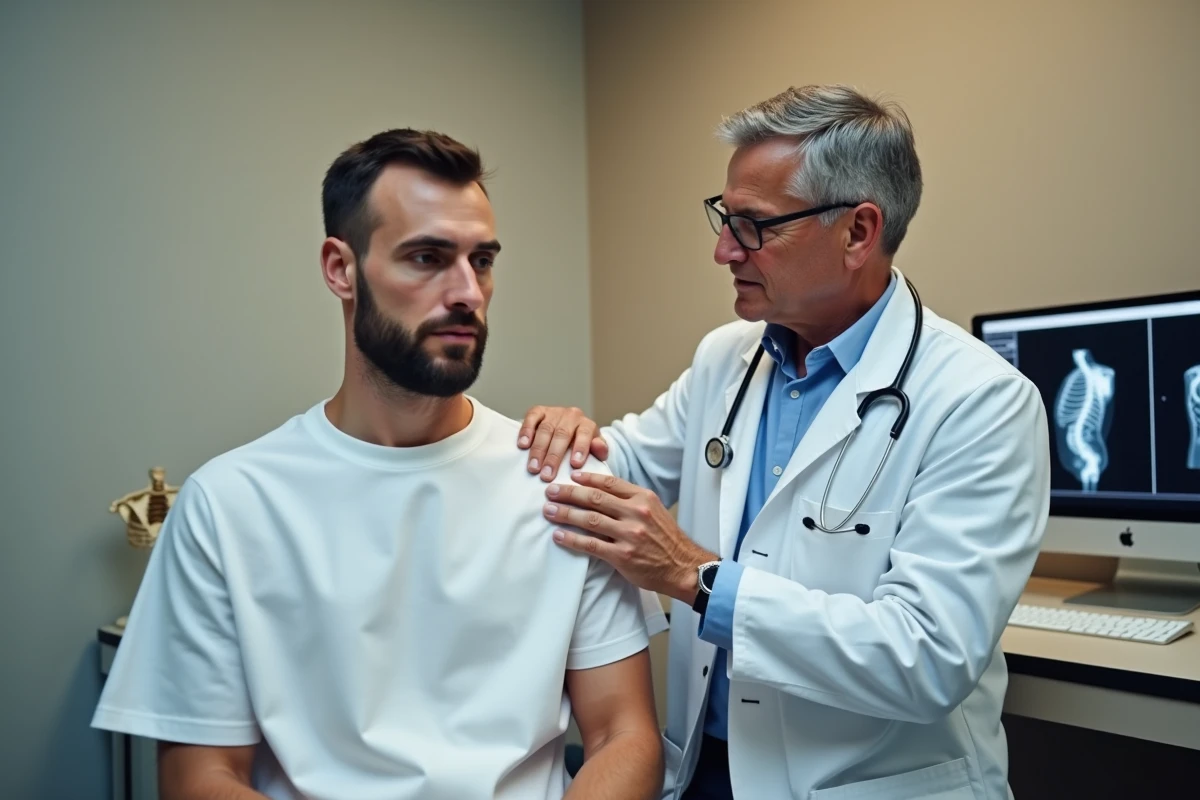
If pain persists at rest despite several weeks of well-conducted rehabilitation, or if the arm gradually loses strength, medical advice is necessary. Imaging (ultrasound or MRI) can check if the tear has progressed to a partial or complete rupture, which may alter treatment.
Working with a physiotherapist trained in shoulder rehabilitation remains the safest framework for dosing progression. A home self-rehabilitation program works well as a complement, but initial follow-up by a professional allows for correcting compensations that one may not perceive alone, particularly that notorious overactivation of the upper trapezius that hinders the recovery of the supraspinatus.