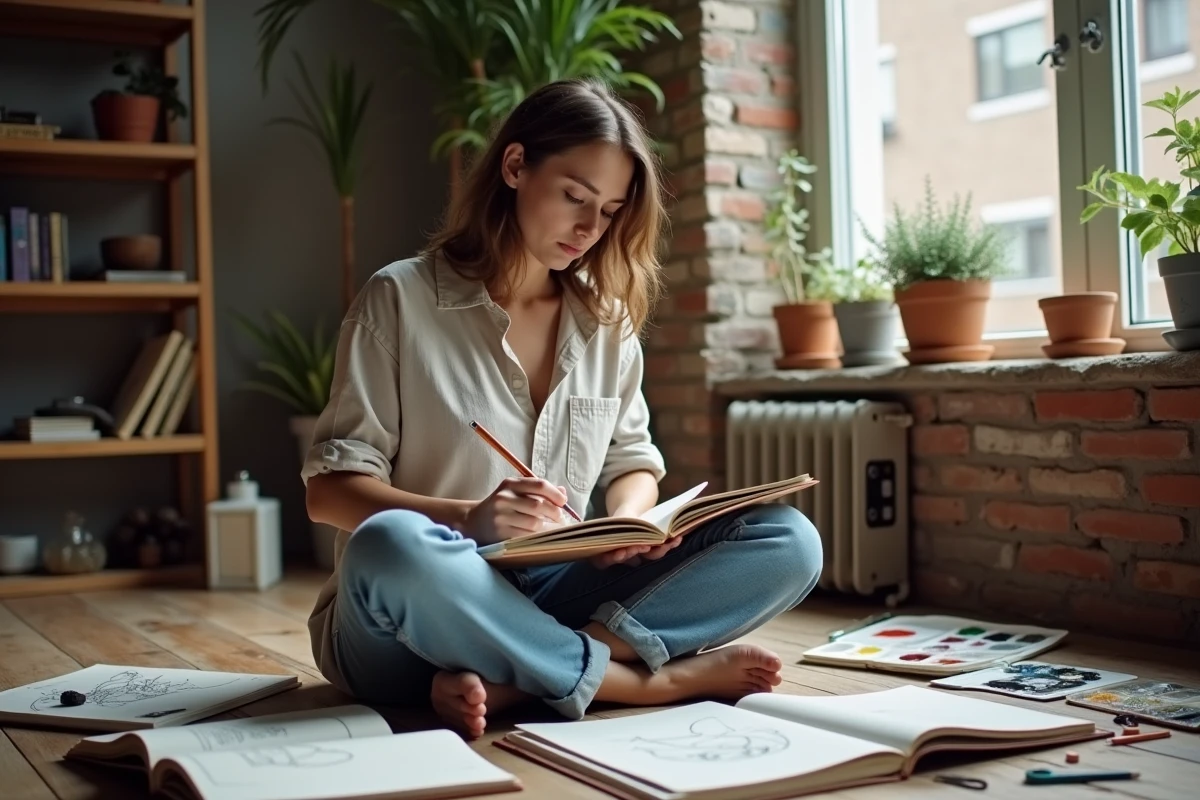
Recent research on everyday creativity shows that the benefits measured by psychology come from tiny, repeated actions each day, much more than from ambitious projects or particular talent. A systematic review published in Frontiers in Psychology in October 2023 (Conner et al.) confirms that very short creative activities are associated with a decrease in perceived stress and an increased sense of self-efficacy.
The determining factor is not the duration or quality of the result, but the regularity.
Micro-creative moments and perceived stress: what research says
The idea of “taking time for oneself” is everywhere, but rarely framed precisely. The review by Conner et al. distinguishes brief creative activities (spontaneous drawing, free writing of a few lines, light DIY) from long sessions of creative leisure. The former, integrated into daily routines, produce effects on perceived stress comparable to those of a short meditation session.
The goal is not to become an artist. It is about reintroducing manual or imaginative gestures into time slots that most people consider unproductive: waiting, commuting, lunch breaks. Daily regularity matters more than the duration of the sessions.
Field feedback varies on one point: some people report increased frustration when the result does not meet their expectations, which partially cancels out the benefit. Research suggests favoring formats without aesthetic goals (doodling, free collage, automatic writing) to bypass this perfectionism trap.
Online resources compile concrete ideas to initiate these daily micro-creative rituals, such as https://www.mademoiselle-emma.fr/, which gathers inspirations and simple tips to adapt according to one’s desires.
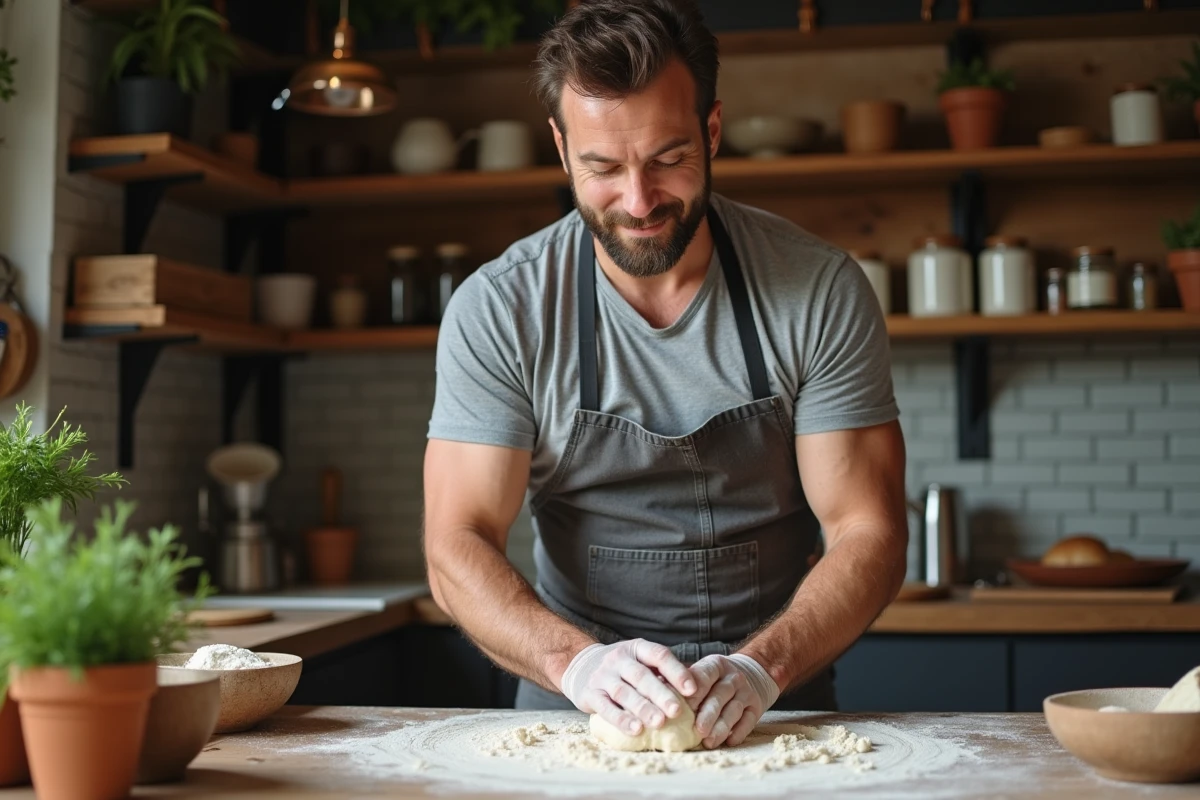
Sober creativity: making with almost nothing
Since 2023, Ademe has observed a clear increase in reuse behaviors for creative purposes among 18-35 year-olds. The barometer “The French and the Circular Economy” published in June 2023 highlights that this trend is not about classic DIY: it is part of a search for material simplicity rather than accumulation of objects.
Specifically, this means recovering before buying. Thrift stores, Vinted, Leboncoin, and neighborhood flea markets become sources of raw materials for decorative or utilitarian projects. Budget constraints, far from limiting creativity, stimulate it: working with what you have on hand forces original solutions.
Reclaimed materials that work in decor and light DIY
- Fabric scraps (old sheets, worn clothes) can be transformed into pouches, placemats, or wall patchworks without a sewing machine, using fabric glue or basic cross-stitch.
- Glass jars, wooden crates, and metal boxes serve as storage, improvised lighting, or planting supports for an indoor garden.
- Cardboard, free and abundant, allows for prototyping shelves, desk organizers, or children’s toys before investing in more durable materials.
The common point of these practices: no prior purchase is necessary to start. The barrier to entry disappears, encouraging action.
Daily creative routine: formats that last
The main difficulty is not choosing an activity, but maintaining the practice beyond the first week. The available data do not allow for a conclusion on a universally effective format, but several avenues recur in the literature and testimonials.
Linking the creative gesture to an existing trigger (after morning coffee, while the water heats, just before sleeping) anchors the practice in an automatic routine. This mechanism, borrowed from habit psychology, works better than a fixed time slot that the slightest constraint can disrupt.
The “visual logbook” format is gaining popularity: a notebook where quick sketches, collages of tickets or packaging, and handwritten notes are mixed. No aesthetic rules, no intimidating blank page since anything that comes to hand can be included.
Three tested formats for busy days
- Free writing for five minutes in the morning, without rereading or correcting, reduces mental load before starting the day.
- A thirty-second sketch (an object on the table, a view from the window) encourages observation without pressure for results.
- Evening collage, using flyers, newspapers, or packaging collected throughout the day, transforms waste into a personal visual archive.

Simplifying daily life through creative sorting
Sober creativity addresses a practical question: owning fewer objects frees up mental and physical space for creating. Sorting one’s belongings by asking “can I do something else with this?” before throwing it away introduces a diversion reflex. An old sweater becomes a cushion cover. A stack of magazines transforms into raw material for collage.
This approach reverses the usual decluttering logic, which consists of clearing out without thinking. It slows down the process, but each sorted object becomes a creative decision rather than a mechanical gesture. Setting a physical limit (a box, a drawer) for materials on hold prevents rebound effects.
Creative daily life requires no budget, no identified talent, nor abundant free time. It relies on short gestures, already present materials, and modest regularity. A doodle on a corner of a tablecloth, a jar transformed into a vase, three lines written before sleeping: these gestures are enough, even if no one else sees them.