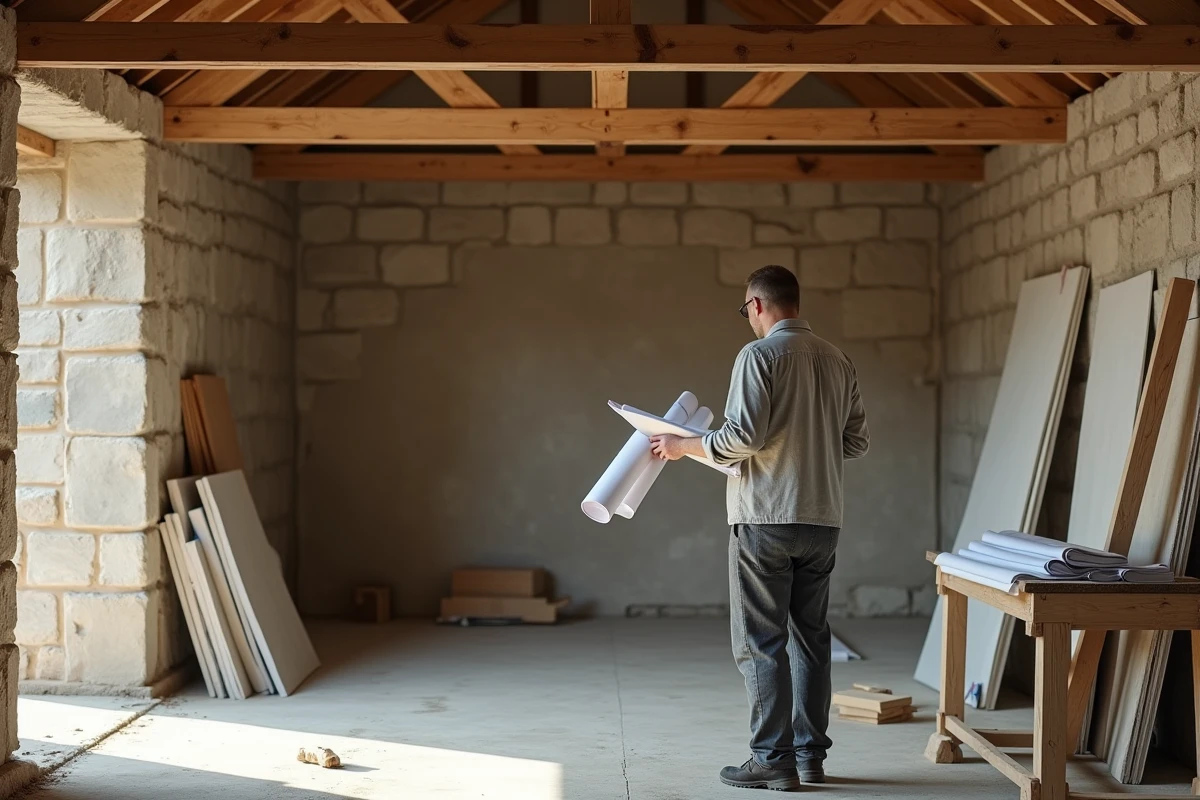
The park of unused agricultural buildings in France represents a considerable resource for residential projects. Transforming an agricultural building into a home involves navigating urban planning, structural, and budget constraints that do not arise in new construction. The regulatory framework varies depending on the area of the local urban planning document, and technical surprises on site are common, even for seasoned professionals.
Agricultural zoning and change of use: the real bottleneck of the project
Before any consideration of renovation or insulation, the question is settled at the level of the PLU. A building located in zone A (agricultural) of the local urban planning document cannot be converted into housing unless the urban planning document explicitly allows it. Some municipalities have included provisions allowing for the change of use of buildings notable for their heritage interest, but this possibility remains at the discretion of each community.
The change of use moves from one category to another among the five provided by the Urban Planning Code: agricultural and forestry operation, housing, commerce and service activities, collective interest facilities, or other activities in the secondary and tertiary sectors. For a farm building or barn, the request is submitted to the town hall.
Field feedback varies on processing times, which can be extended when the CDPENAF (Departmental Commission for the Preservation of Natural, Agricultural, and Forestry Spaces) must provide an opinion.
The detailed steps to successfully carry out this administrative conversion are presented on the Bulle Immobilière website, with an overview of the scenarios according to the type of zone.
Structural diagnosis of an agricultural building before work
A shed or stone barn may appear solid from the outside. The reality of the load-bearing structure is only revealed after a thorough diagnosis. This step determines the actual feasibility of the project, well before the choice of finishing materials.
Framework and load-bearing walls
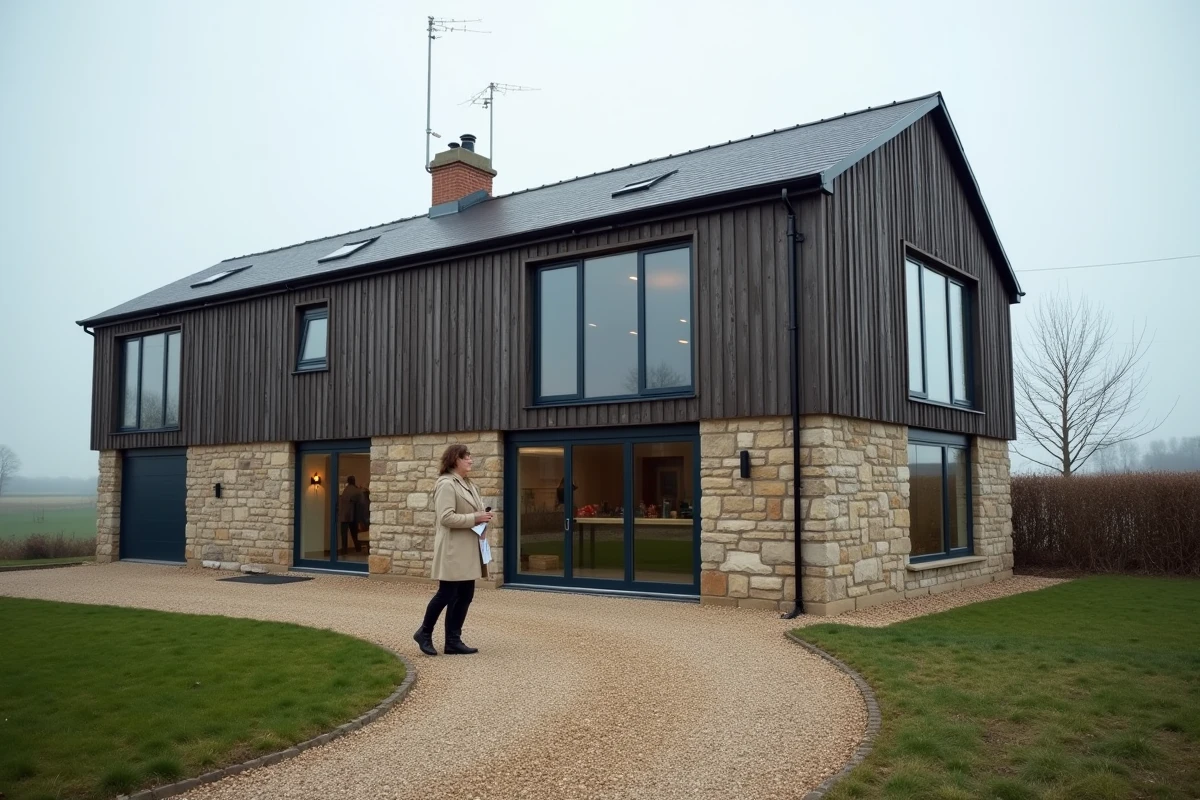
In an old building, the wooden framework is the first element to examine. The solid oak frames of the barns in Berry or Touraine often withstand time better than more recent softwood structures, but attacks from wood-eating insects or fungi remain common. A carpenter or structural engineering firm must intervene before any building permit application.
The condition of the stone walls cannot be judged by their apparent thickness. Walls made of rubble bonded with earth may require costly underpinning repairs. The presence of through cracks, bulging, or rising damp necessitates further investigations.
Foundations and soil
Old agricultural buildings rarely rest on foundations designed to support residential floors. A farm building designed to store hay or shelter livestock does not have the same load-bearing requirements as a house with a habitable upper floor. A soil study allows for the assessment of load-bearing capacity and the adaptation of foundation solutions.
Building permit and hiring an architect for renovation
The change of use accompanied by work modifying the load-bearing structure or the facade of the building triggers the obligation to submit a building permit (CERFA n° 13409 or n° 13406 depending on the case). A simple prior declaration is sufficient only if the work does not alter the external appearance.
For over 150 m² of created floor area, hiring an architect is mandatory. For smaller projects, a project manager can coordinate the site, but support from a professional is recommended given the technical complexity of these conversions.
- Check the compatibility of the PLU with the change of use before any purchase of the building
- Have a complete structural diagnosis (framework, walls, foundations) carried out by a study office
- Anticipate the opinion of the CDPENAF if the building is located in a strictly agricultural zone
- Plan a project management budget separate from the construction budget
Insulation and connections: budget items often underestimated
In a project to transform an agricultural building into a home, the items for insulation and connection to networks absorb a part of the budget that buyers often underestimate at the outset.
Thermal insulation of a stone building
Thick stone walls provide significant thermal inertia in summer, but their thermal resistance remains low in winter. Interior insulation is often the only option when the stone facade has heritage significance that the PLU or the architect of historical buildings requires to be preserved.
The choice of insulation materials must take into account moisture management. On old walls, high vapor permeability insulators (wood fiber, hemp wool) limit the risk of condensation within the wall. A poorly positioned vapor barrier on a stone wall can cause issues within a few years.

Servicing and connections
An isolated agricultural building is not necessarily connected to water, electricity, or collective sanitation networks. The cost of servicing directly depends on the distance to existing networks, and this distance can make the project economically unrealistic in some cases. Individual sanitation, with its constraints of spreading area and soil study, adds a layer of complexity.
Overall budget for converting a barn into a residence
Providing a price range per square meter for this type of project would be misleading. The budget depends on the condition of the existing structure, the desired level of finish, the location, and whether or not it is necessary to service the land. Field feedback varies on this point, with some projects resulting in costs comparable to new construction, while others exceed it significantly due to unforeseen structural repairs.
Three items deserve particular attention in budget preparation:
- Structural repairs (framework, load-bearing walls, foundations), which can represent the heaviest part of the project
- Insulation and energy compliance, essential for achieving adequate living comfort
- Project management fees and preliminary studies (soil, structure, sanitation), often omitted from initial estimates
Having each item separately priced by artisans or a project manager before signing a sales agreement remains the best protection against financial setbacks. A global estimate without detail by lot does not allow for arbitration if the budget spirals out of control during the project.